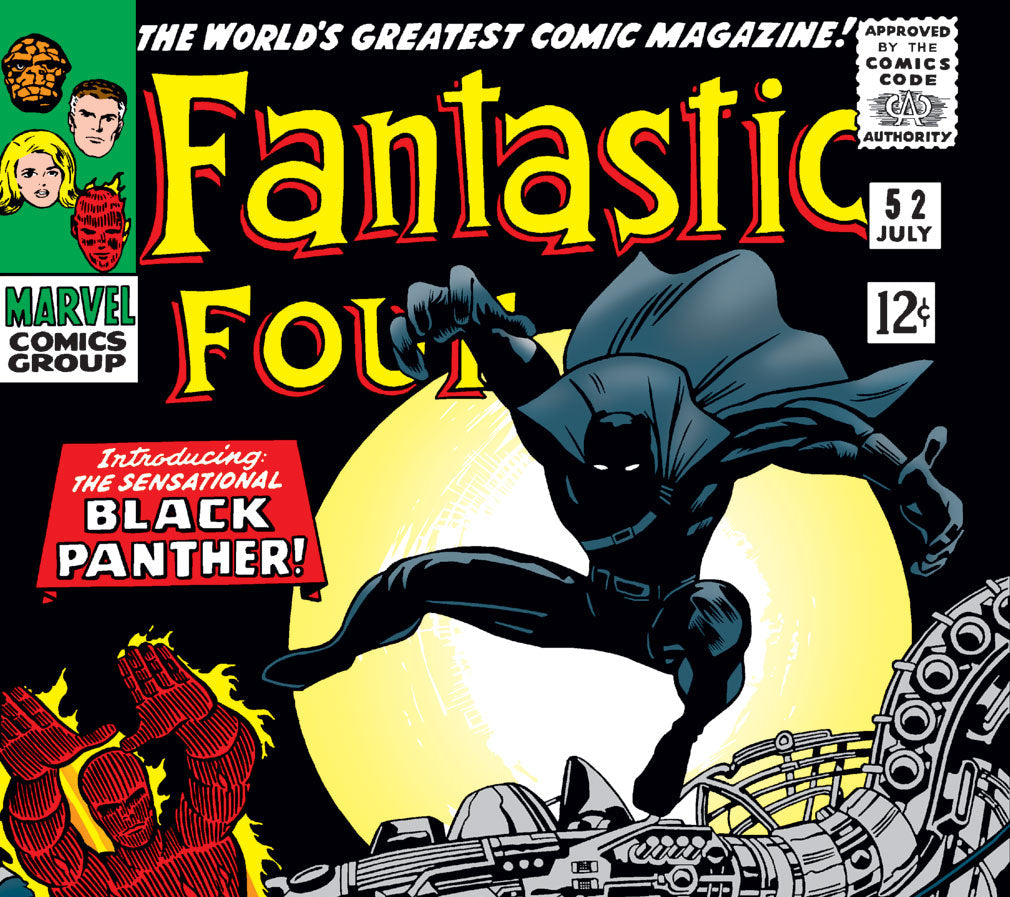
A New Kind of Sovereign

In 1966, the world was cracking open. Streets filled with protest, voices rose against centuries of silence, and somewhere in that noise, a new story found its way onto a printed page.

His name was T’Challa. A king from a hidden nation called Wakanda — self-possessed, brilliant, unbent by history. His people had never been conquered. Their technology and their spirit grew side by side, untouched by empire.

For readers who had only ever seen Africa through someone else’s lens, this was lightning. Here was a vision of Black power that asked for nothing and apologized for less. T’Challa didn’t arrive to be redeemed by the world. He arrived to show the world what redemption could look like.

He wasn’t the hero who came to save us. He was the reminder that we were never powerless to begin with.

Archetypes of Black Panther

Carl Jung believed that we all carry ancient patterns — archetypes — within us. They’re not costumes we wear, but living forces that shape how we lead, protect, and grow. Black Panther doesn’t embody a single role. He moves through a whole constellation of them, each revealing another facet of what true sovereignty looks like.

The King

The King

T’Challa embodies sovereignty with clarity and restraint. His authority is not about dominance, but stewardship. He rules with a steady hand and a grounded sense of responsibility.

The Warrior

The Warrior

Disciplined, focused, and honorable. T’Challa fights only when he must, and when he does, he becomes the living edge of Wakanda’s strength.

The Sage

The Sage

Scientist, strategist, thinker. His brilliance shapes every choice he makes. He leads not just with power, but with understanding.

The Bridge-Builder

The Bridge-Builder

He stands between worlds: tradition and change, Wakanda and the larger world. His calling is connection — opening what was closed without losing what makes it sacred.

The Healer

The Healer

He carries his nation’s wounds and his own. Instead of turning them into rage, he turns them into renewal. His leadership closes the gap between past and future.

Erich Neumann, a student of Jung, wrote that every mature soul must pass through a breaking point — a moment when inherited structures collapse so a new form of identity can emerge. T’Challa’s path is no different. Before he can become the king Wakanda needs, the old order must crack. Before integration, there is rupture. Before sovereignty, there is the honest chaos of facing what has been avoided.

The Mirror of the Exile

No ruler escapes the reflection he refuses to face. For T’Challa, that reflection was Erik Killmonger — born of Wakanda’s own blood, left to the violence of the outside world.

In the Panther’s Rage era, the echoes of this confrontation were already forming. Killmonger wasn’t just an enemy; he was the unhealed wound of a people divided. He returned with the fire of every exile, asking why a nation that could liberate millions chose to stay hidden.

Their battle was more than political. It was spiritual. Killmonger fought for vengeance, T’Challa for preservation — both blind to the truth that wholeness can’t exist without reckoning.

When the fight was over, victory felt hollow. The king saw himself in the fallen rebel and understood that to heal Wakanda, he had to welcome what it had rejected.

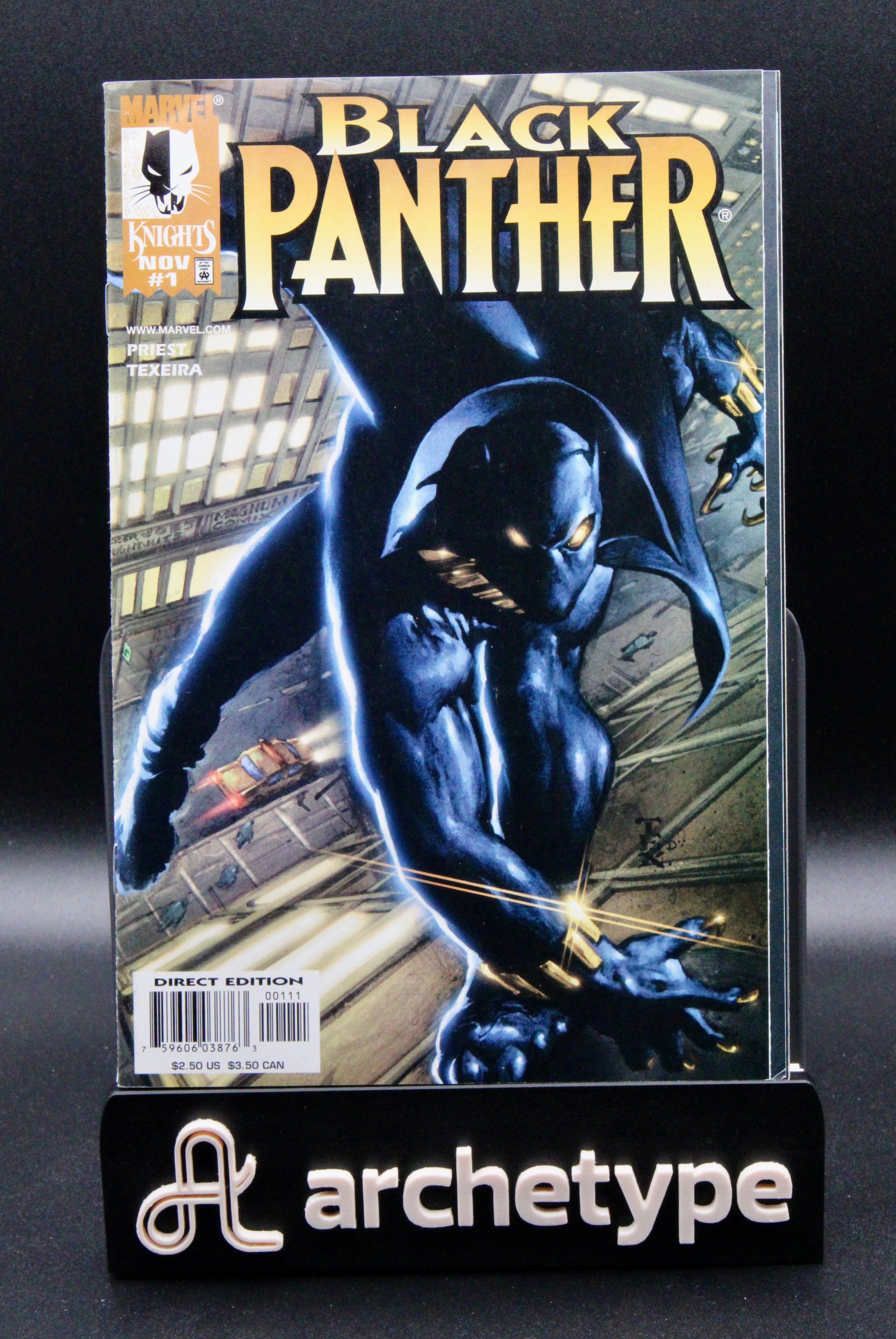
Black Panther #1 – Marvel (1998) NM-
Vendor:Marvel
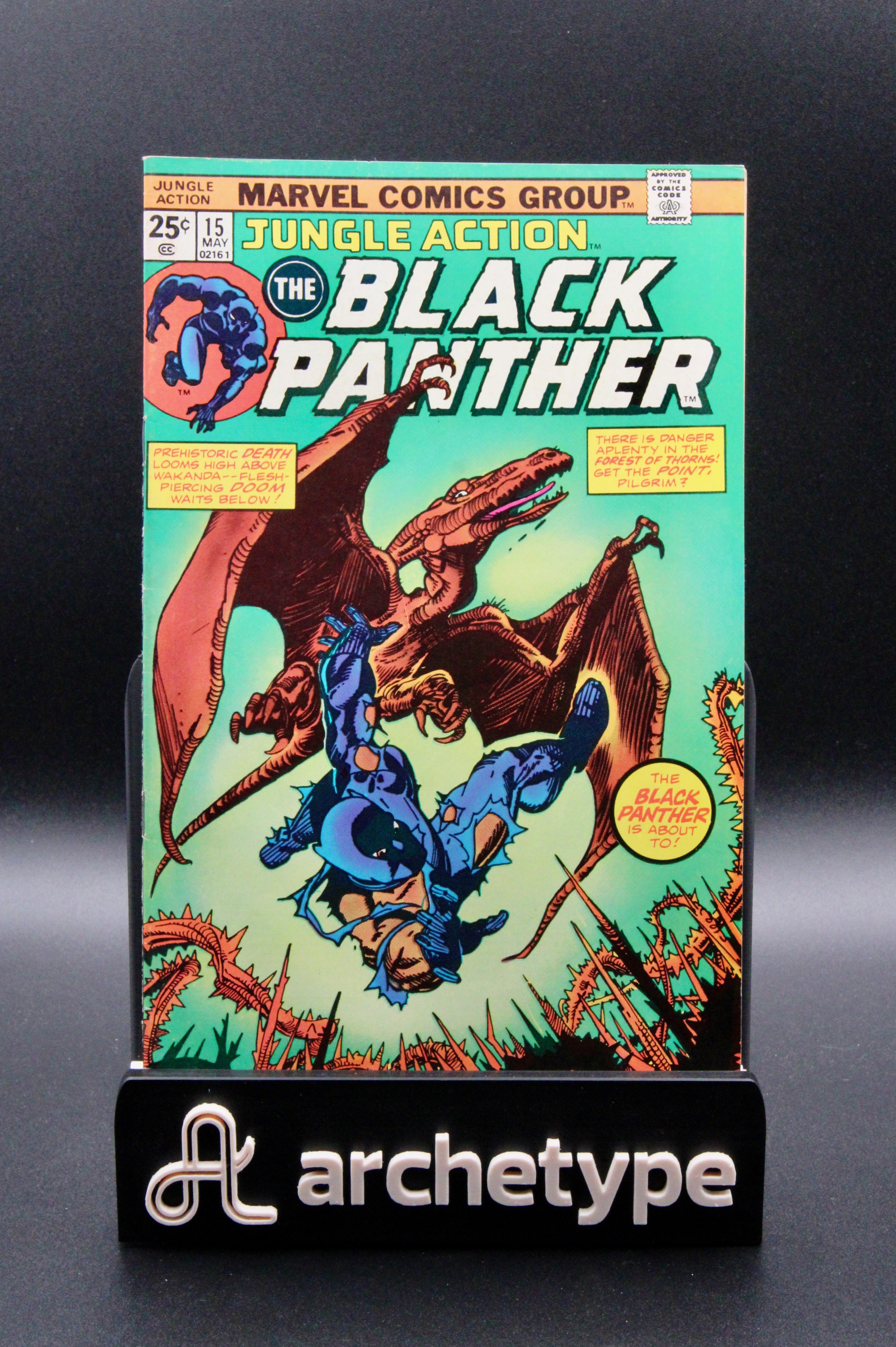
Jungle Action : Black Panther #15  – Marvel (1975)
Vendor:Marvel
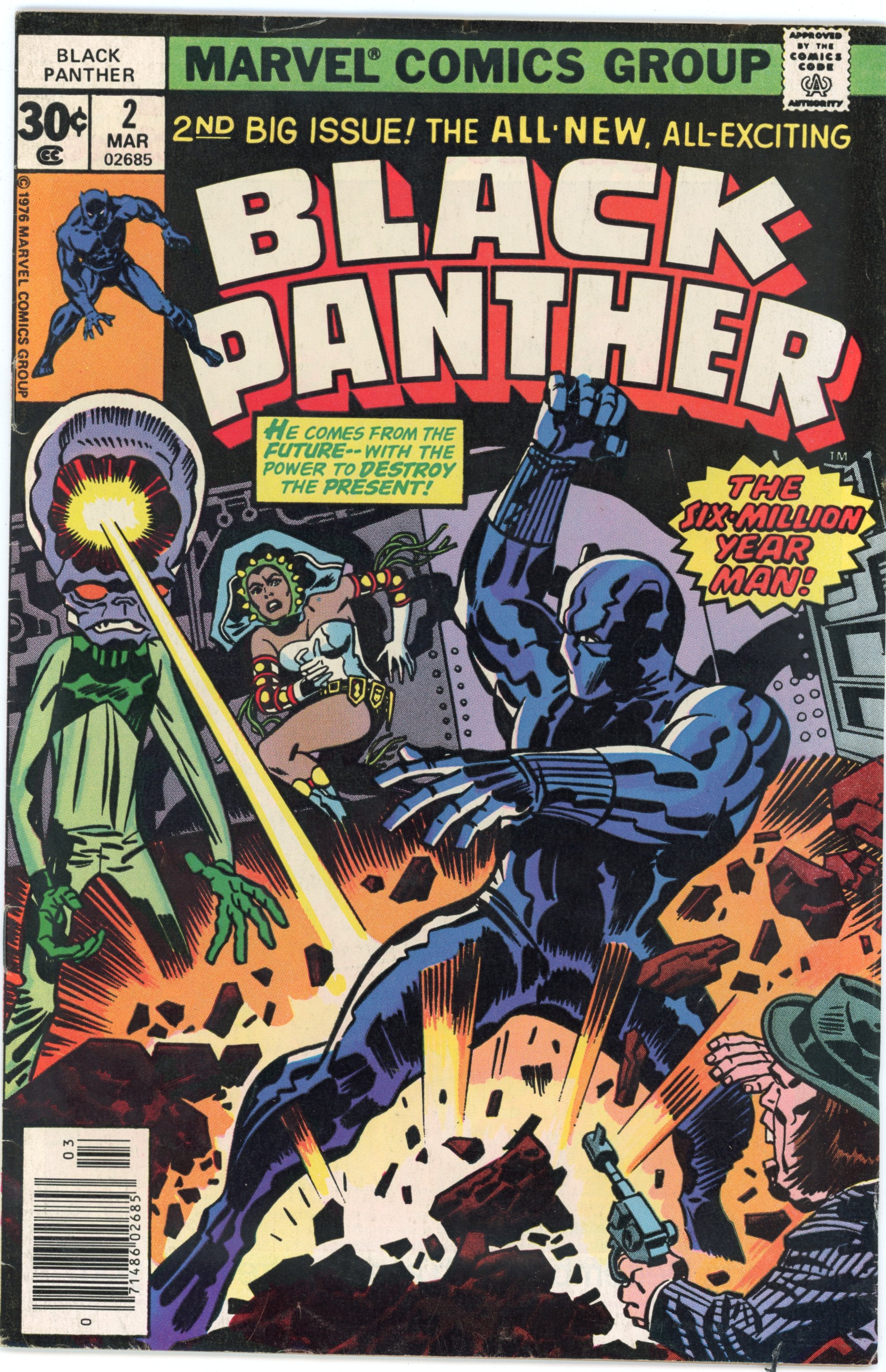
Black Panther #2 – Marvel Comics (1976) VF
Vendor:Marvel
Black Panther #15 – Marvel Comics (1979) NM
Vendor:Marvel
Black Panther #14 – Marvel Comics (1978) VF
Vendor:Marvel
Black Panther #15 – Marvel (2000)
Vendor:Marvel
Black Panther #14 – Marvel (2000)
Vendor:Marvel
Black Panther #13 – Marvel (1999)
Vendor:Marvel
Black Panther #12 – Marvel (1999)
Vendor:Marvel
Black Panther #11 – Marvel (1999)
Vendor:Marvel
Black Panther #10 – Marvel (1999)
Vendor:Marvel
Black Panther #9 – Marvel (1999)
Vendor:Marvel

20% off when you bundle 3 or more

Bundle and Save

Remove
Remove
Remove